Comprehensive Materials Testing and Analytical Services at Materials Metric

Generic selectors
Exact matches only
Search for your required testing or Service
Post Type Selectors
page
post

Chemical Purity & Contaminant Screening

Chemical Purity & Contaminant Screening provides a critical foundation for evaluating material quality, safety, and compliance across regulated and non-regulated industries.

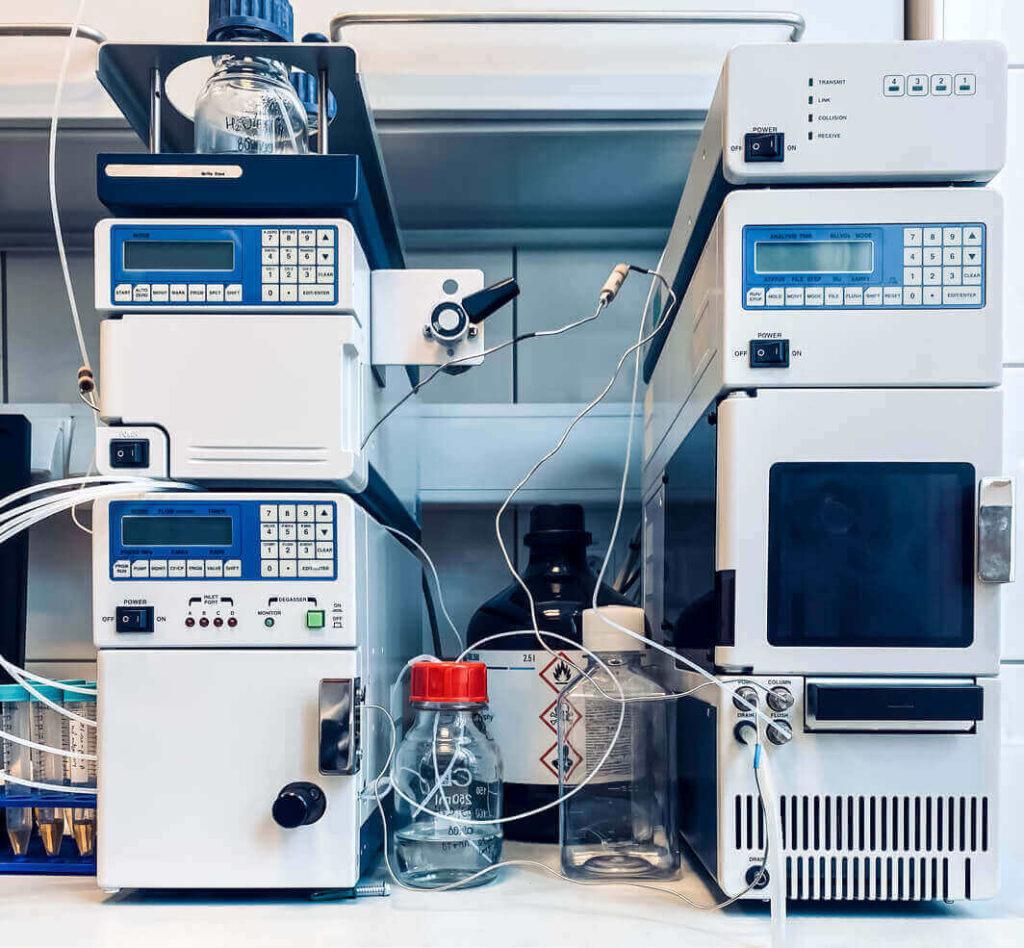
At Materials Metric, we combine advanced chromatographic, spectroscopic, and mass-based techniques to detect residual solvents, unreacted monomers, additives, stabilizers, impurities, degradation products, and leachable compounds at trace levels. These analyses deliver the chemical confidence required for formulation development, raw material verification, batch release, failure investigation, and FDA/ISO/ICH-aligned regulatory submissions.

Our approach supports a wide range of product systems, including biomaterials, polymers, pharmaceuticals, medical devices, packaging, industrial chemicals, and consumer goods.

To Learn more about our Chemical Purity & Contaminant Screening Services or other testing needs, please contact us


Frequently Asked Questions

What is chemical purity and contaminant screening?

Chemical purity and contaminant screening determines how much of a desired substance is present and identifies unwanted impurities, residues, or foreign materials in a sample. It combines separation, spectroscopic, and chemical techniques to assess both assay (purity) and the nature and level of contaminants. Materials Metric uses it to verify that a material meets its specification and is free of problematic substances.

What can purity and contaminant screening detect?

It can detect organic impurities, residual solvents, degradation products, cross-contamination, trace elements, particulates, and unknown foreign compounds. Techniques such as HPLC, GC, FTIR, mass spectrometry, and elemental analysis are combined to identify and quantify what is present. Screening can target known specification limits or investigate the source of an unexpected contaminant.

What sample is required for purity and contaminant screening?

A representative sample of a few grams is usually sufficient, though suspected contaminant particles, residues, or affected areas should be submitted separately where possible. Both the questionable material and a known-good reference or control help distinguish inherent composition from contamination. Describing the symptom, process history, and suspected source greatly improves the investigation.

Which standards apply to purity and contaminant screening?

Work follows validated or fit-for-purpose methods aligned with ASTM, ISO, and USP where applicable, matched to the analyte class and material. Specific compendial chapters may apply for a given impurity type, such as residual solvent or elemental impurity limits. Where the contaminant is unknown, Materials Metric applies a documented investigative workflow rather than a single fixed standard.
Scroll to Top